
Digital Ships, AI and Automation: Future Skills for Maritime Careers
Ships are becoming more digital. Future seafarers must build technical awareness, communication discipline and learning ability from the start.
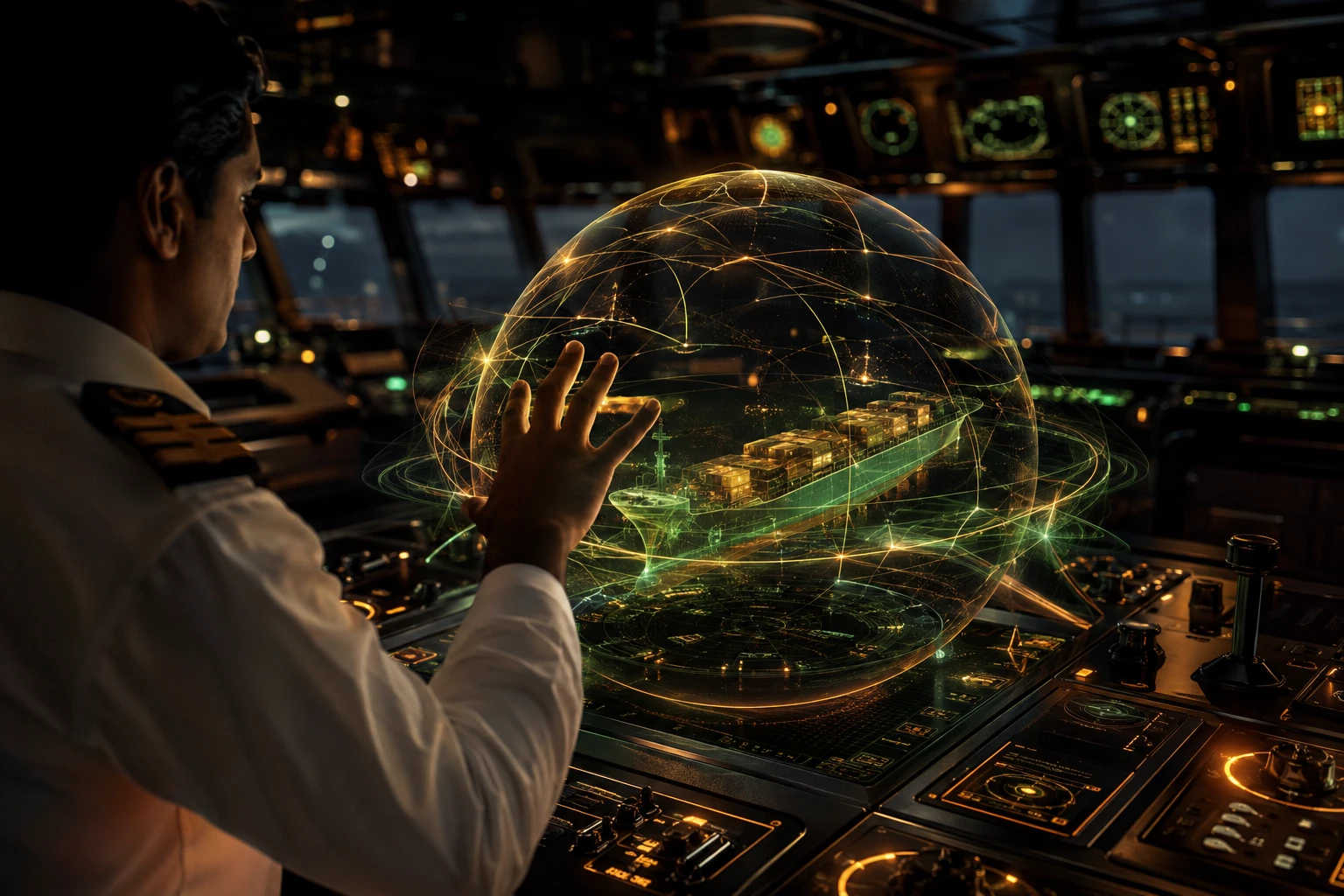
The maritime industry is becoming more digital. Ships are using smarter monitoring systems, navigation tools, automation, sensors, communication systems and data-based decision support.
Future seafarers must be ready for:
- ECDIS awareness
- Digital navigation
- Engine monitoring
- Electrical and automation systems
- Cyber-safety basics
- Maritime communication discipline
- Data reading
- Simulator-based learning
- Technical adaptability
Technology will not remove the need for trained seafarers. It will raise the standard expected from them.
HBIMS-NAF&SA advises candidates to build English communication, computer comfort, technical curiosity and disciplined learning habits from the beginning.
What is actually changing on board
The shift is less dramatic than the word automation suggests, and more consequential. Modern vessels carry integrated bridge systems, electronic navigation, condition-monitoring sensors on machinery, and shore-connected performance reporting. The ship is generating far more data than it did a decade ago, and increasingly that data informs decisions.
Machinery maintenance is moving from fixed schedules toward condition-based intervention: repairing what sensors indicate needs attention rather than what the calendar says. Voyage planning increasingly incorporates weather routing and fuel-consumption modelling. Cargo and engine parameters are monitored continuously rather than logged periodically.
The skills this actually demands
The demand is not for programmers. It is for officers who can interpret what a system is telling them and recognise when it is wrong.
That means understanding what a reading represents physically, not just what number appears. It means noticing when two instruments disagree and knowing which to trust. It means being able to operate when a system fails, because systems fail and the ship still has to be navigated.
The officer who trusts an instrument uncritically is as much a risk as the one who ignores it. Competence now sits in the judgement between those positions.
What automation will not remove
Ships still require people aboard for reasons that have little to do with steering. Emergency response, firefighting, medical care, cargo securing, mooring, inspection and the judgement calls that follow equipment failure all require crew physically present.
Autonomous vessels exist and will expand in specific trades and coastal routes. That is a genuine development. It is not, on any near horizon, a replacement for crewed deep-sea shipping. Treat forecasts of imminent crewless fleets with the same caution you would apply to any other confident prediction about a decade away.
How to prepare without overreacting
Learn the fundamentals properly, because that is what lets you evaluate a system rather than obey it. Take electronic navigation and machinery-monitoring modules seriously rather than as boxes to tick. Develop the habit of asking why a system produced a particular output.
Then keep learning after certification. The specific technologies aboard your ship in ten years are not the ones you will train on now. The capacity to absorb new systems is the skill with a long shelf life.
Reference basis Current maritime research and industry developments discuss AI, simulator analytics, automation, digital monitoring and data-driven vessel operations.