
 Career Awareness
Women in Merchant Navy: Awareness, Eligibility and Confidence
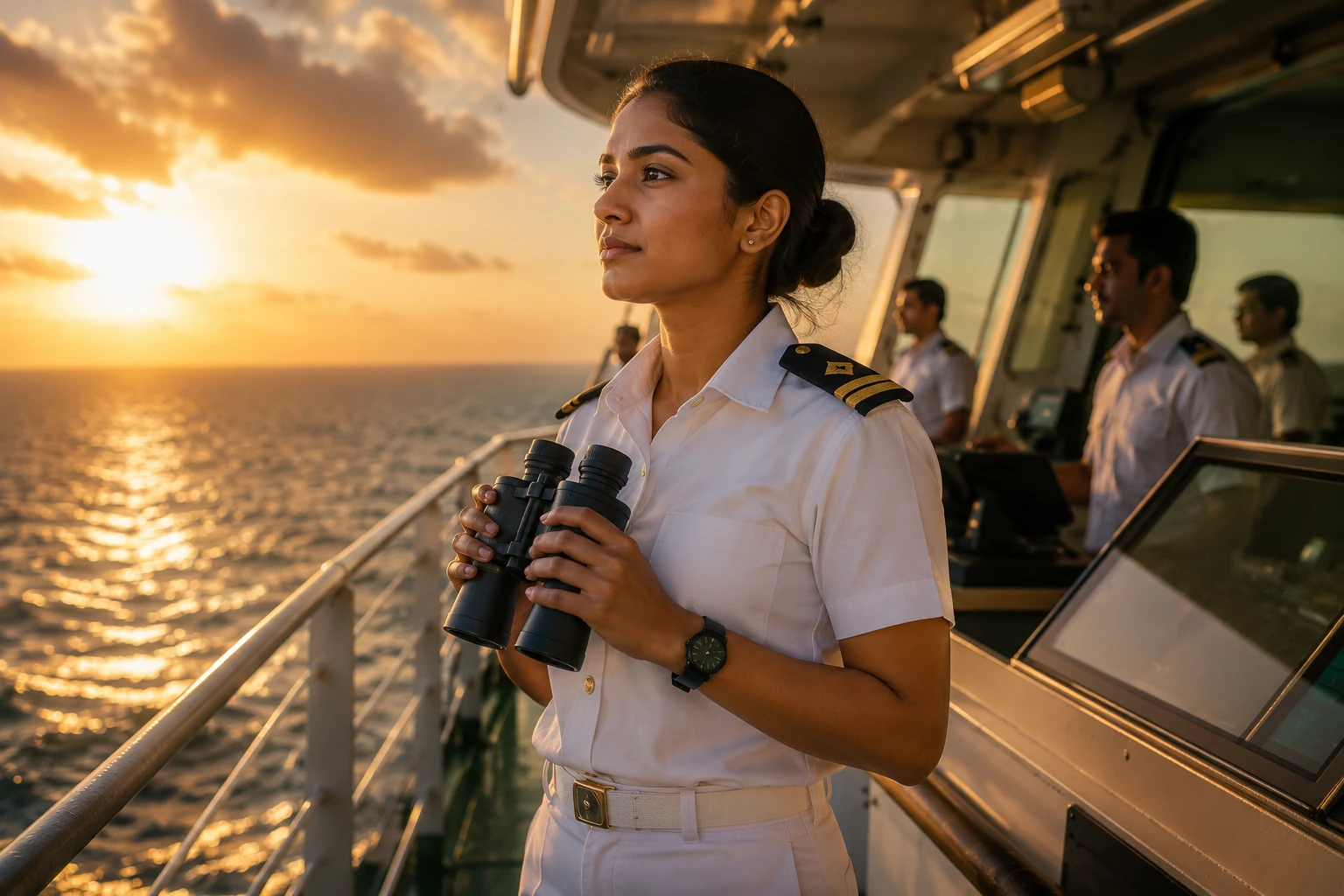
Female candidates can explore Merchant Navy pathways, subject to eligibility, medical fitness, documents, MTI acceptance, seat availability and course rules.
HBIMS-NAF&SA ™ encourages female aspirants and parents to understand
- Course eligibility
- Age relaxation, where applicable
- Medical standards
- Hostel and campus arrangements
- Career pathway
- Parent counselling
- Safety and discipline expectations
- Documentation requirements
Merchant Navy is a professional career. Every candidate, male or female, must begin with eligibility screening and clear counselling.
For a female aspirant, confidence should come from accurate information rather than assumptions about whether maritime careers are suitable for women. The right starting point is to understand the course requirement, training environment, medical standards, residential arrangements and future pathway connected with the programme being considered. Each course may have its own eligibility and institutional conditions, so the candidate should be assessed against the applicable requirements before making commitments.
Parents may also have practical questions about campus discipline, accommodation, safety, communication and life at sea. These questions should be discussed openly during counselling. Clear expectations help the family distinguish between genuine career preparation and unrealistic promises. The candidate should also understand that professional maritime training demands punctuality, physical and mental readiness, respect for hierarchy, teamwork and strict safety behaviour.
HBIMS-NAF&SA promotes an eligibility-first and information-led approach so that female aspirants can evaluate maritime opportunities with clarity. The aim is not to promise outcomes, but to help candidates understand whether they are suitable for the pathway, what preparation is required and what questions should be resolved before admission.
Building Informed Confidence for Women Exploring Maritime Careers
For a young woman considering the Merchant Navy, the first requirement is not bravado; it is accurate information. Maritime careers can be demanding, highly structured and professionally rewarding, but the correct decision must begin with understanding the specific course, eligibility conditions, medical expectations, training environment and career pathway. Confidence is strongest when it is built on facts rather than on promotional claims or assumptions about what women can or cannot do at sea.
Female aspirants should evaluate maritime options with the same seriousness expected from every candidate. Academic suitability, age conditions, document readiness and medical fitness remain fundamental. Where a course or rule provides a specific provision for women, it should be understood through the applicable official framework rather than through hearsay. The aim is to identify a pathway that genuinely matches the candidate's profile and then prepare for it methodically.
The training environment deserves equal attention. Residential maritime education usually brings uniform standards, time discipline, practical training, physical routines, safety drills and close interaction with instructors and fellow cadets. A candidate should understand hostel arrangements, campus discipline, reporting procedures and the nature of practical training before joining. Parents often have additional questions about safety, accommodation and communication; these questions are legitimate and should be addressed transparently rather than dismissed.
Career awareness must go beyond the image of wearing a uniform. Life at sea can include long periods away from home, multinational crews, changing weather, watchkeeping routines and the need to perform professionally under pressure. Women entering the profession should be prepared to establish competence, communicate clearly and follow safety and operational standards just as their male colleagues do. Professional credibility grows from skill, reliability and conduct.
Representation matters because seeing women perform successfully in maritime roles can expand what younger aspirants consider possible. However, representation should never be used to oversell the career. Every individual experience is different, and no one should be promised a particular shipboard outcome merely because the industry is encouraging broader participation. Admission, training completion and future employment depend on multiple stages and independent decisions.
For HBIMS-NAF&SA, the right approach is informed guidance: screen the candidate, explain the pathway, involve the family where appropriate, highlight medical and documentation requirements, and keep the decision grounded in eligibility. Women do not need exaggerated promises to enter maritime careers. They need transparent pathways, realistic preparation and the confidence that comes from knowing exactly what the profession expects.